
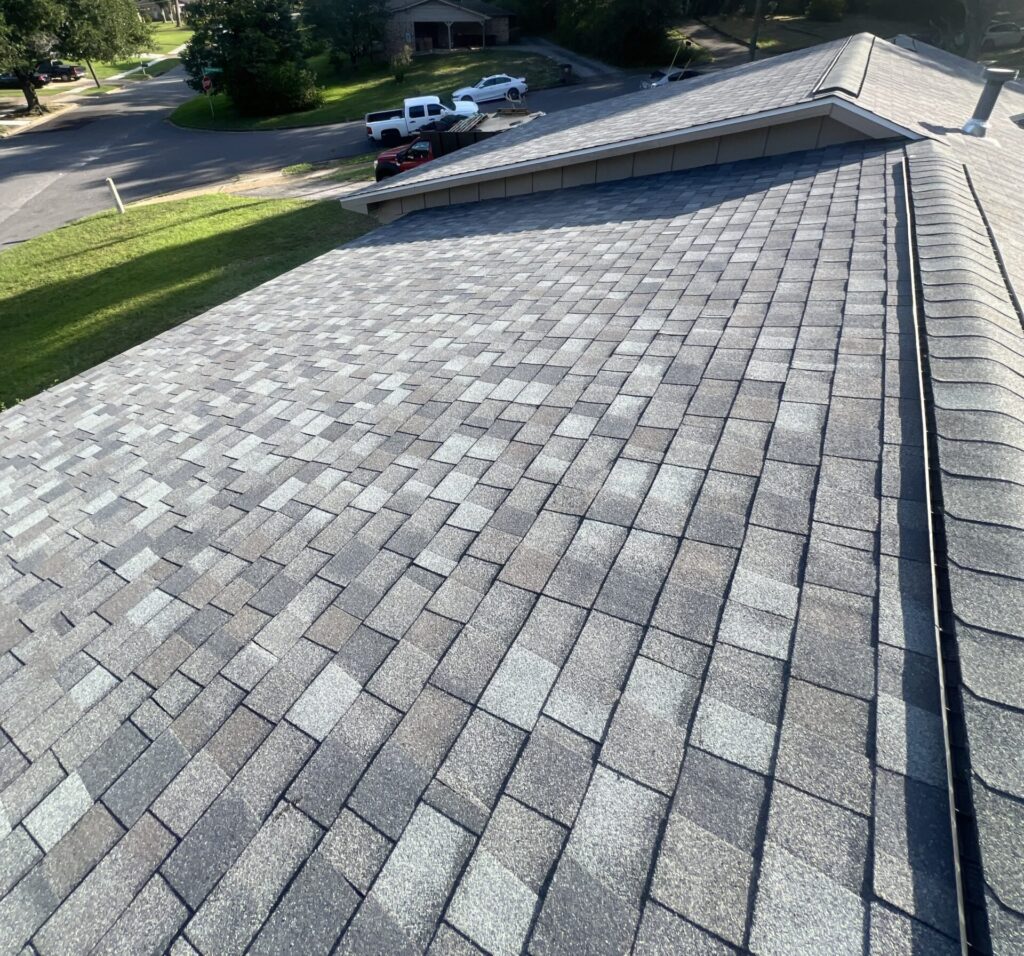
Short answer: most roof leaks in Mobile and Baldwin County do not start in the middle of the shingles. They start where something breaks up the roof: pipe boots, flashing around chimneys and walls, valleys, and spots where wind has lifted or torn off shingles. And because Gulf Coast storms push rain sideways, a roof that stays dry in a normal shower can still leak in a tropical storm.
Below are the causes we find most often on homes around Mobile, Daphne, Spanish Fort and Fairhope, what each one looks like from inside the house, and what a repair usually costs.
What to Do Right Now If Your Roof Is Leaking
- Catch the water. Put a bucket or towels under the drip and move furniture, electronics and anything valuable out of the way.
- Stay clear of a sagging ceiling. If the drywall is bulging with water, keep people and pets out from under it.
- Take photos. Photograph the ceiling stain, the drip and anything that got wet. If you can safely see the roof from the ground, photograph that too.
- Get it covered. If water is coming in steadily, we can tarp the roof to stop further damage until a permanent repair is done. Call or text (251) 308-0135.
9 Common Causes of Roof Leaks on the Gulf Coast
1. Cracked pipe boots
Every plumbing vent that comes through your roof is sealed with a rubber collar called a pipe boot. Years of Alabama sun dry that rubber out until it cracks and lets water run down the pipe. If your stain is near a bathroom or kitchen, a pipe boot is one of the first things we check. It is also one of the least expensive leaks to fix.
2. Failed flashing at chimneys, walls and dormers
Wherever the roof meets something vertical, like a chimney, a dormer wall or a second story, it needs metal flashing woven into the shingles. When that flashing rusts, pulls loose or was never installed right, water gets behind it. A bead of caulk is a common quick fix, but caulk dries out in the heat and the leak comes back. The lasting fix is to replace the flashing.
3. Wind-lifted or missing shingles
Strong gusts can break the seal under a shingle and fold it back, or tear it off completely. You may find shingles in the yard after a storm, or notice a shingle that looks lifted or creased from the ground. Once the seal is broken, rain gets under the shingle even if it lays back down.
4. Wind-driven rain during storms
If your roof only leaks during heavy storms, and only when the wind blows from one direction, wind-driven rain is the likely cause. Tropical storms and hurricanes push water sideways into ridge vents, gable vents and the edges of flashing. Building a new roof to the FORTIFIED standard with a sealed roof deck is designed to keep water out even if shingles are lost. You can read about the standard on the IBHS FORTIFIED Home website, or see our FORTIFIED roofs page.
5. Worn valleys
Valleys, where two roof slopes meet, carry more water than any other part of the roof. When the shingles or metal in a valley wear out, or debris piles up there, water spreads sideways under the shingles and finds its way in.
6. Pine straw, leaves and clogged gutters
Pine straw and leaves pack into valleys and gutters all over the Mobile area. When gutters overflow, water backs up under the roof edge and rots the fascia and decking. A missing or poorly installed drip edge makes it worse.
7. Shingles on a low-slope section
Porch roofs, carports and additions often have very little slope. Shingles need pitch to shed water, so on these sections they leak no matter how new they are. Low-slope areas need a membrane or a coating system. See our flat roof repair and TPO roofing page.
8. Nail pops and an aging roof
As a roof ages, nails can back out and punch up through the shingle above them, and the shingles themselves lose granules and start to curl. If your roof is 15 to 20 years old and leaks are showing up in more than one spot, the roof may be near the end of its life. Our post on how long a roof lasts on the Gulf Coast covers the warning signs.
9. It may not be the roof at all
In Mobile’s heat and humidity, plenty of ceiling stains come from the attic, not the roof. An air conditioner in the attic can overflow its drip pan when the condensate line clogs, and a poorly ventilated attic can sweat enough to drip on the ceiling. If your stain is right under the AC unit or shows up on dry, humid days, check that first. We look at the attic during every inspection so you do not pay for a roof repair you do not need.
How Much Does Roof Leak Repair Cost in Mobile?
Most roof repairs we do start at $385. The final price depends on what is causing the leak, how much of the roof is damaged, the pitch and whether any rotted decking needs to be replaced, which runs about $90 per sheet. You get a written price before any work begins. For more on local repairs, see roof leak repair in Mobile, AL.
If the damage is widespread, a repair may only buy you a little time. Our guide to repairing versus replacing a roof and our roof replacement cost guide will help you compare.
Get the Leak Found and Fixed
ARC Roofing is a locally owned roofing company in Mobile, licensed in Alabama (#41194) and GAF Certified. We find the real source of the leak, show you photos of what we found, and give you an honest answer on whether a repair will do. Start with a free roof inspection, or contact us to schedule a visit.