Short answer: for most flat and low-slope roofs around Mobile and Baldwin County, TPO is the go-to for larger commercial roofs, modified bitumen is a tough, repair-friendly choice for porches, additions and smaller low-slope sections on homes, and an elastomeric roof coating is the money-saver when your existing flat roof is still sound and just needs to be sealed and protected. The right answer depends on the roof you have now, how water drains off it, and how much foot traffic it gets.
We repair, replace and coat all three on homes and businesses across the area. Here is how they compare in plain terms, with the Gulf Coast in mind.
Quick Comparison: TPO vs. Modified Bitumen vs. Roof Coating
| TPO | Modified bitumen | Elastomeric roof coating | |
|---|---|---|---|
| What it is | Single-ply white membrane with heat-welded seams | Layered asphalt membrane (base sheet + cap sheet) | Liquid coating rolled or sprayed over an existing roof |
| Best for | Commercial roofs and large flat areas | Porches, additions, carports, small low-slope sections | Sound roofs that need sealing, not replacing |
| Typical life | About 20–30 years | About 15–25 years | About 10–15 years, then recoat |
| Heat & sun | White surface reflects heat | Cap sheet protects it; white cap or coating keeps it cooler | White coating reflects heat and protects the roof under it |
| Foot traffic | Fair; walk pads recommended | Very good | Fair; depends on the roof under it |
| Tear-off needed? | Usually | Usually | No, if the roof is dry and sound |
Lifespans are typical ranges, not promises. Installation, drainage and maintenance matter more than the brand on the roll.
TPO: The Commercial Workhorse
TPO (thermoplastic polyolefin) is a single-ply membrane, usually white, rolled out over insulation or a cover board. The seams are heat-welded, so the membrane fuses into one sheet instead of relying on glue. That matters here, because seams are where flat roofs leak first when heavy Gulf Coast rain sits on them.
- Pros: reflects heat (helpful for buildings with big cooling bills), strong welded seams, a good fit for large open roofs.
- Cons: it is a single layer, so it does not love heavy foot traffic, dropped tools or limbs. AC service techs walking the roof can damage it, so we add walk pads where they go.
Manufacturers like GAF publish detailed comparisons of single-ply membranes such as TPO and PVC. GAF’s building science guide is a good read if you want the technical side.
Modified Bitumen: Tough and Easy to Repair
Modified bitumen (often called “mod bit” or torch-down) is an asphalt membrane with rubber or plastic polymers added. It goes down in layers, a base sheet and a cap sheet, so you get two layers of protection instead of one.
- Pros: handles foot traffic well, holds up to impact, and can be patched in sections. It is a common choice for porch roofs and low-slope additions tied into a shingle roof.
- Cons: a dark cap sheet gets hot in our summers. A white or reflective cap sheet, or a coating on top, helps it last longer.
See a real example: our modified bitumen roof replacement in Mobile, AL.
Elastomeric Roof Coating: Restore Instead of Replace
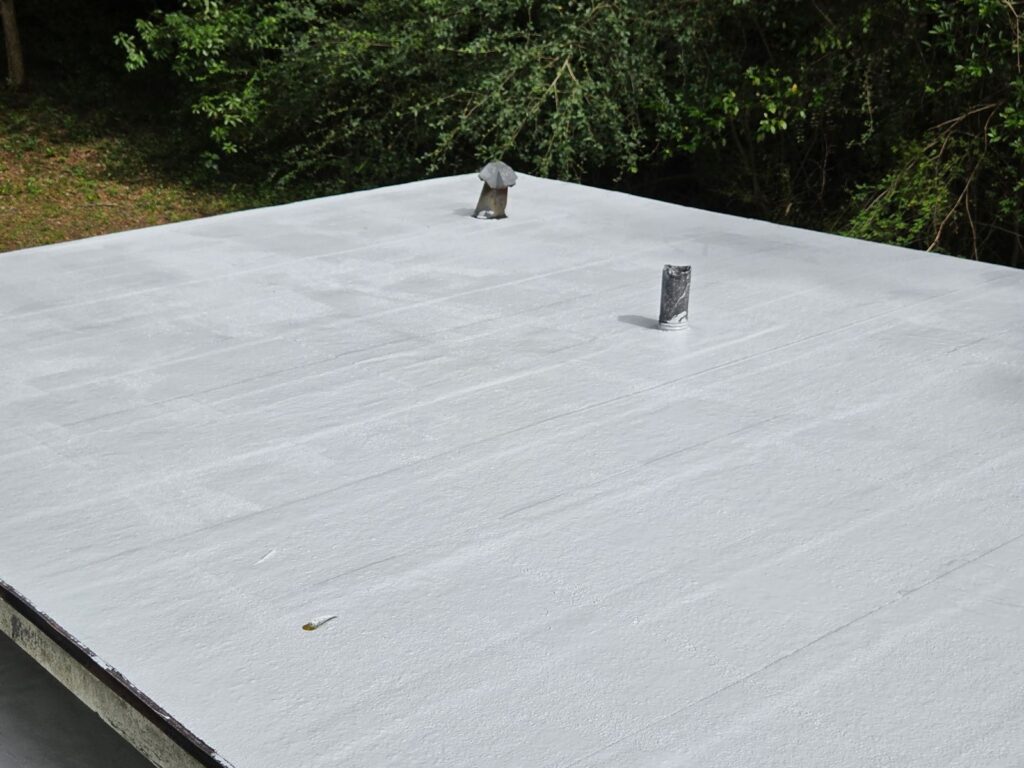
An elastomeric coating is a thick liquid that cures into a seamless, rubbery layer. It stretches and moves as the roof heats up and cools down. It can go over many existing flat roofs, including TPO, modified bitumen, built-up roofs and metal, as long as the roof underneath is still sound and dry.
- Pros: usually costs much less than a tear-off, no tear-off mess, covers seams and small cracks in one layer, and a white coating reflects heat.
- Cons: it is not a fix for a failed roof. If the insulation or decking under it is wet or rotted, a coating just seals the problem in. It also needs recoating down the road.
Ponding water matters. If water sits on your roof for days after a storm, the type of coating matters. Some coatings handle standing water much better than others. We check drainage first and pick the coating to match, or fix the low spots before coating.
See a real example: a new shingle roof and low-slope roof coating in Mobile, AL. The homeowner’s review is on that page too.
What Works Best on Gulf Coast Roofs
- Heavy rain and ponding: drainage comes first. Whatever system you choose, water has to get off the roof. We look at scuppers, gutters and low spots on every inspection.
- Heat and sun: white TPO or a white coating keeps the roof surface cooler, which helps the roof last and can lower cooling costs.
- Wind: edges and flashings are where flat roofs peel back in a storm. Proper edge metal and fastening matter as much as the membrane.
- Where flat meets shingles: on homes, the leak is often at the transition where a porch or addition ties into the main roof. That detail has to be flashed right no matter which system goes on.
How We Decide What Your Roof Needs
- Inspect the surface: seams, blisters, cracks, flashing and drains.
- Check for wet areas: soft spots and stains inside tell us if water is already under the membrane.
- Look at drainage: where water sits and how long.
- Give you options in writing: repair, coat or replace, with photos of what we found and what each option costs.
If a coating or repair will do the job, we will tell you. Not every flat roof needs a replacement.
Frequently Asked Questions
Can you put a coating over a leaking flat roof?
Sometimes. If the leak is from a few failed seams or flashings and the roof is otherwise dry, we can repair those spots and then coat. If water has soaked the insulation or decking, those areas need to be replaced first.
Is TPO or modified bitumen better for a house?
For a small porch or addition on a home, modified bitumen is often the better fit because it handles foot traffic and ties in well with shingles. TPO makes more sense on larger flat areas and commercial buildings.
How long does a flat roof last in Mobile?
Typical ranges are about 20–30 years for TPO, 15–25 years for modified bitumen, and 10–15 years for a coating before it needs a fresh coat. Sun, standing water and maintenance all change those numbers. Read more in how long a roof lasts on the Gulf Coast.
Why does my flat roof keep leaking?
Most flat roof leaks start at seams, flashings, drains and the spot where a low-slope section meets a shingle roof. See why roofs leak in Mobile-area homes for the most common causes.
Do you work on commercial flat roofs?
Yes. We repair, coat and replace flat roofs on commercial buildings across Mobile and Baldwin County. See our commercial roofing page.
Get a Straight Answer on Your Flat Roof
Not sure if your flat roof needs a repair, a coating or a new membrane? We will get up there, check it, and give you a written estimate with photos. Learn more about our flat roof repair and replacement in Mobile and Baldwin County, book a free roof inspection, or contact us.